One collection, two roles
Keep chess play and estate monitoring as distinct modes. Select which pieces participate in patrol, the areas they may enter and when they return to the board.
 ROBOTICSCommission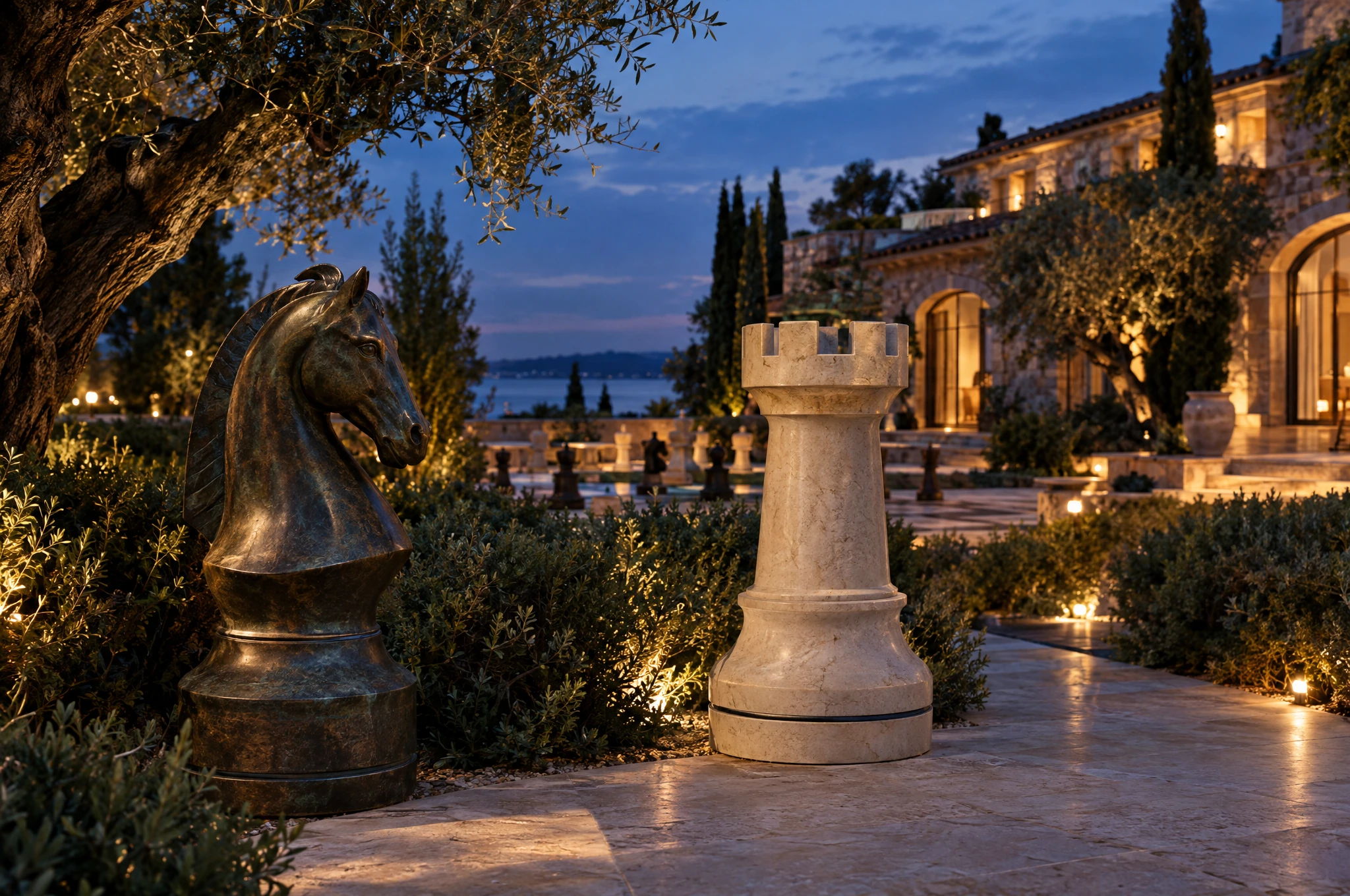
Designed to blend into the estate as a beautiful chess set, then provide discreet observation at night. A proposed configuration with integrated sensors, concealed mobility and charging, and optional daytime play.
Commission your robot →Keep chess play and estate monitoring as distinct modes. Select which pieces participate in patrol, the areas they may enter and when they return to the board.
Specify night vision, optional thermal imaging, spatial sensors, video surveillance, environmental sensing and human-reviewed alerts around the property’s actual requirements.
Plan designated board docks and sheltered stations around the house. Solar generation, storage and backup power are assessed against both chess play and patrol duty.
Each direction begins with a platform and feasibility assessment. Images show design concepts; performance and availability are agreed for the specific project.
V7 SENTINEL / GARDEN COURT OPTION
A chess set first in appearance, an estate-monitoring system in purpose. Sensors follow the material lines; mobility and charging disappear into the design when parked. By day, play. By night, a discreet watch.
Discuss Sentinel ChessONE COLLECTION / TWO LIVES
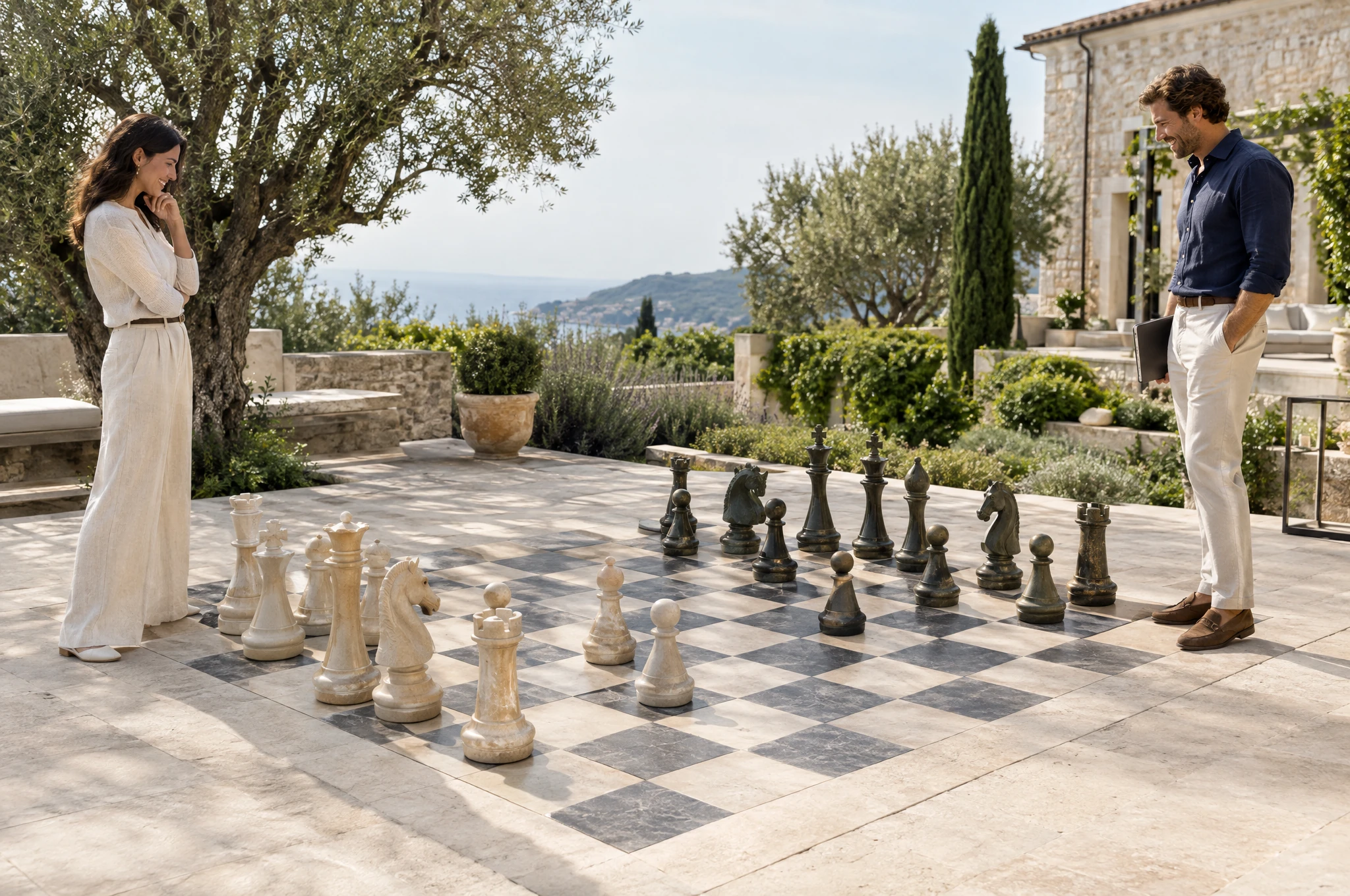
THE DAYTIME RITUAL
Sculptural pieces sit naturally within your garden or terrace. Legs remain concealed when parked; finishes match the architecture. Play a match whenever the moment calls.
THE NIGHT-TIME ROLE
Owner-approved observation positions and optional quiet patrols support the night-time brief. Integrated sensors, privacy boundaries and human-reviewed alerts keep the purpose clear while the form blends in.
The collection remains an elegant chess set and garden sculpture. Activate a daytime match or exhibition when wanted; chess and monitoring use a deliberate mode change.
At night, selected pieces observe from agreed positions or follow approved routes. Proposed night vision, perimeter sensing and alerts bring events to a person for review.
Return to a discreet board charging square or an architectural dock around the house. The parked silhouette remains a chess piece, with no exposed charging equipment in the intended design.
Coordinate stone, bronze, wood and pearl finishes with the estate. Explore flush sensor windows within existing inlays, retractable legs, concealed dock interfaces and restrained status lighting. Every visible detail should belong to the architecture.
A SENSOR SUITE, SPECIFIED FOR YOUR ESTATE
Choose modules for a defined task. Compatibility, range, environmental limits and performance are established during development.
Explore low-light cameras, infrared illumination and optional thermal imaging for observation in changing light.
Depth cameras, LiDAR, radar or proximity sensors may support mapping, obstacle awareness and monitored boundaries.
Defined zones, gate-status integration and event-based video can bring a boundary crossing or an open access point to the owner’s attention.
Assess temperature, smoke or heat detection, water-leak sensing and weather inputs for the selected installation.
Owner notifications, an optional alarm, task lighting and two-way audio can be scoped around human review and the setting.
Battery, joint temperature, balance, contact and enclosure-status monitoring support the proposed maintenance and return-to-dock functions.
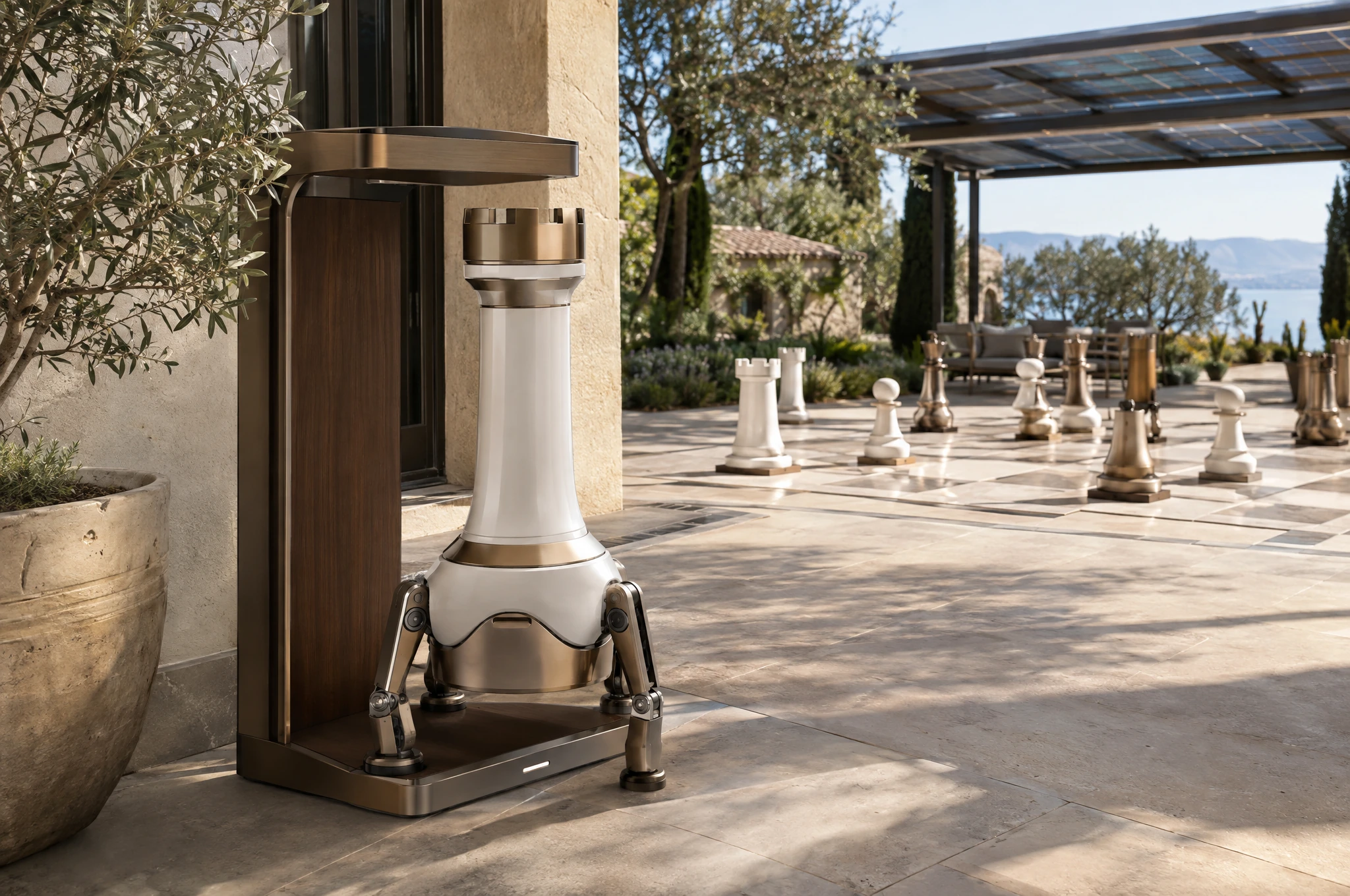
BOARD DOCKS / HOUSE-SIDE STATIONS
The board becomes a resting place as well as an arena. Discreet stations around the property offer alternative charging locations.
Proposed articulated legs unfold for approved routes and retract into the base when parked. Terrain, stability, noise and retraction clearances need testing; stair climbing is not assumed.
Specify permitted routes, no-go areas, patrol schedules, stop controls and guest-aware pauses. Alerts support a human response; the concept does not pursue or restrain people.
Choose camera zones, privacy masking, authorized viewers, recording schedules and retention. Local recording, remote access, access logs and clear recording status for authorized users are options to assess.
Smoke and heat event reporting can be explored. Any fire-suppression accessory or integration is a separate specialist-designed and validated project; no autonomous firefighting capability is claimed.
Sentinel is a proposed monitoring configuration within the Garden Court design study, not a separate announced production run. Images are visual concepts; sensors, mobility, weather limits, charging and security performance require platform and site validation.
One idea. Your own robot.
Commission